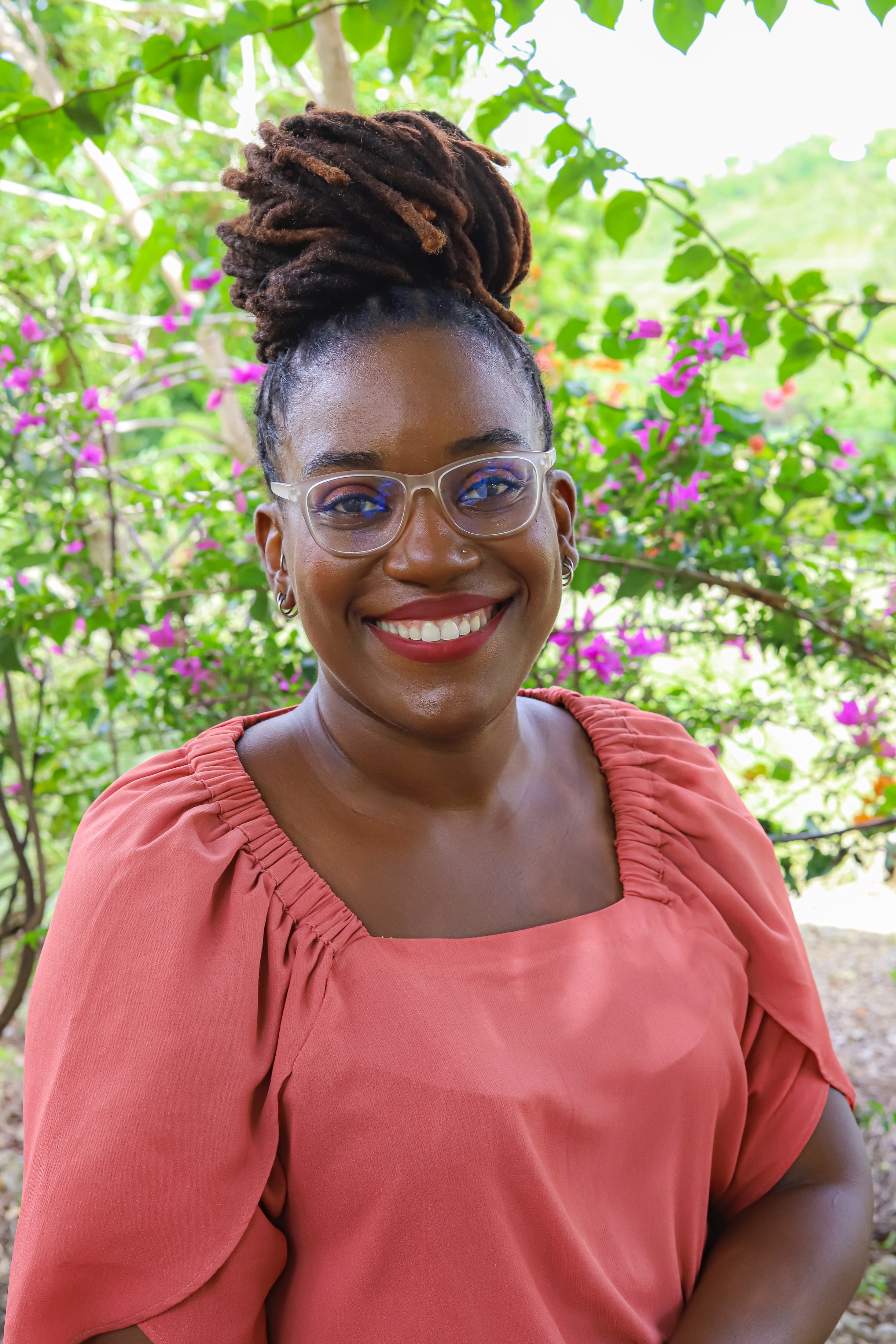
 What first sparked your interest in pharmacology and toxicology, and when did you realize this was the path you wanted to follow?
I was always a science nerd as a kid and I wore that title proudly. When I went to undergrad, I double-majored in chemistry and biochemistry, mainly because that was the area of science that really drew me in during high school. I just decided to follow that path. But as I moved through the degree, I realized I didn't want to pursue pure chemistry research anymore. I started having conversations with mentors, asking, 'Okay, I have this chemistry degree—what can I do with it that's a bit more applied?' Pharmacology kept coming up in those discussions. I hadn’t been familiar with it before, but I did some research and liked what I found. I connected with mentors in that area and started asking them, 'What do you do with this degree?' It ended up feeling like the best way to apply my chemistry background in a more biological context, which is exactly what I was looking for.
What makes the online master's degrees in pharmacology and toxicology at MSU standout from other similar programs offered at other institutions?
Our online program is entering its 16th year, so we have a really strong foundation in online education. The Department of Pharmacology and Toxicology at Michigan State is well-established and highly respected in the field—many of our faculty are in leadership positions within professional societies in both pharmacology and toxicology. We have a strong pedigree, for lack of a better word, and our instructors are true experts in their fields.
The program itself is fully online and fully asynchronous, which gives our students a lot of flexibility. They can complete it part-time or full-time, depending on what works best for them, and that’s something they really value. I’d say 80 to 85% of our students are working full-time jobs, so they appreciate being able to take one class at a time or take a semester off if life outside of school gets busy. We really emphasize that students can move through the program at their own pace, and that flexibility is something we highlight right from the start.
Something else I think makes us stand out is the balance we strike between academic and industry instructors. I didn’t create that model—I've only been the director for three years—but I definitely appreciate it. We have faculty from MSU teaching the fundamentals, and we also have adjunct instructors who work in industry and have already earned their master’s or PhD. Students really like that combination because they get both the foundational knowledge and the applied, real-world insight. They’ve spoken really highly of that duality in our curriculum.
When it comes to flexibility, asynchronous instruction really allows people to fit their education into their own schedules. I have students submitting assignments at 3 a.m. or 10 p.m., and I don’t always know if they stayed up late or got up early, but it works for them. Some students only do coursework on weekends because that’s when they have time, while others submit during the week to keep weekends free for family. We really give them the freedom to do what works best.
Students can also shape their own timeline through the program. Some take one course per semester and finish over several years, while others go full speed and finish in a year or a year and a half. Either way, they all earn the same degree, and we’re clear about that from the beginning—there’s no one “right” way to get through it.
Most of our students are in the U.S., and we do have a strong Midwest presence, but we also see a lot of students from the coasts. For example, we have a large student population in the Boston area, where there’s a big biotech industry, and we see quite a few students from California as well. A lot of our growth has come through word of mouth. We’ll have one student complete the degree, talk about it with coworkers, and then suddenly we have several students from the same company. Sometimes they’re even working on the degree together, which creates a kind of unofficial cohort experience, even in an online setting.
What types of students or professionals do you see as the ideal candidates for this program, and how does it support their career goals?
That’s actually a hard question to answer, because the short version is—so many different types of students find success in this program. Typically, our students come from contract research organizations or drug development companies within the industry, but we also see individuals who use the degree as a stepping stone to professional schools like medical or pharmacy school. Some go on to pursue PhDs, while many use the degree for career advancement—either for promotion within their current field or to transition into a new one. For certain roles, an advanced degree is a requirement, and the flexibility of our program allows students to earn that degree while working, which helps make those transitions more seamless. We’ve had students and alumni find roles across the entire biomedical industry—anywhere a toxicologist or pharmacologist might be needed. Because the degree is so customizable, it can support a wide range of career paths. One graduate might become a forensic toxicologist, another might work in drug development, and another might end up at a government agency like the FDA. Even though they earn the same degree, their curriculum might be tailored to fit their specific goals. So while it’s hard to define a ‘typical’ student, this program really supports advancement across academia, industry, nonprofits—anywhere pharmacology or toxicology expertise is valuable.
You offer hands-on opportunities like the Applied Project in Integrative Pharmacology (PHM 895). How does this enhance the online learning experience for students?
We offer two MS degrees in the program: one is the MS in Pharmacology and Toxicology, and the other is the MS in Integrative Pharmacology. For the MS in Integrative Pharmacology, students complete a hands-on project that we facilitate in collaboration with their employer. Since it’s an online program, they complete the project on-site wherever they’re located, rather than coming to campus for a lab component. Often, they use a project from their current job or take on something additional, but it’s typically based in their workplace. That work is completed through PHM 895, the Applied Project in Integrative Pharmacology. For students in the MS in Pharmacology and Toxicology, which is the more popular and larger of the two programs, they complete a literature-based capstone project (PHM 982). That involves conducting literature research and writing a review paper with space for their own analysis and reflection. So while students in the Integrative Pharmacology program get more of a hands-on experience, both degrees offer meaningful ways to apply their learning–whether through real-world projects or deep literature-based exploration.
What advice would you give to prospective students trying to decide between the two programs? What about current MSU students or recent graduates looking to make an impact in the pharmacology and toxicology industry?
For prospective students trying to choose between our two programs, I always say: email us, ask questions. There’s a lot of info on our website that compares the programs, but don’t hesitate to reach out. I’ve even connected prospective students with current students or alumni so they can hear real-life experiences from both programs. Get as much information as you can to make an informed decision about what’s best for you. There’s also overlap between the curricula, so we’ve had students switch programs partway through once they figure out which path fits better—and that’s totally okay. One important factor is that the MS in Integrative Pharmacology requires support from a workplace research setting, so having that conversation with your employer early on can help clarify which program makes the most sense for your situation.
Take the time to think critically about what you actually need to pursue the role you want. Not everyone needs a Master’s degree, and not everyone needs a PhD. Maybe the career you’re aiming for only requires a bachelor’s degree, or a bachelor’s plus a certificate. Maybe it does require a Master’s—maybe that’s our program, or maybe it’s a different one, depending on your goals. I really encourage people to take a breather and reflect, even though life doesn’t always encourage that.